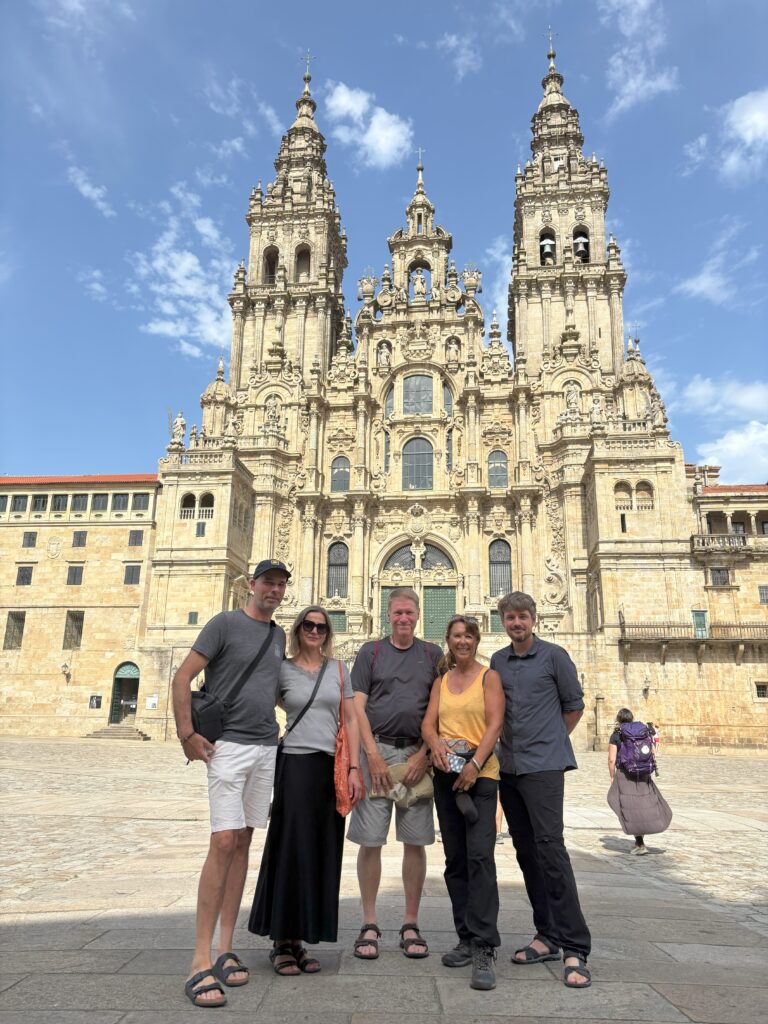
Camino Sanabrés spans 364 km from Granja de Morenhuela in the province of Zamora to Santiago de la Compostella and is probably one of the least known Camino walks in Spain.
It is at once a route in it is own right, constitutes as the final branch of the longer Via de la Plata which is almost 1000 km long. The route offers different variations with inflection points at A Gudiña, Ourense and Cea.
Having set aside 10 days of walking, we decided to stick to the official route with start from A Gudiña which conveniently has a high speed train connection from Madrid.
Day 0: Arrival in A Gudiña
We arrived around 20:00 in A Gudiña where we had booked a room at Pension Oscar. The reason for picking a hostel over the public albergue was mainly because albergues do generally not accept reservations and arriving quite late, we did not want to risk that the albergue was already full.
After having dinner, we took a short walk around the village to scout out the start of the route which is found close to the church with signs towards Campobeceros (official route) and Verin (alternate route)
Day 1: A Gudiña – Campobecerros
Having walked several Camino routes in the past, we didn’t consider 20 km as a particularly challenging distance to walk, but being overconfident is never a smart move on the Camino. We got out only around 8:30 which is quite late taking into consideration the heat and sunlight exposure.
Adding to this, this stage of the route has a high altitude which means fewer trees and less shadow.
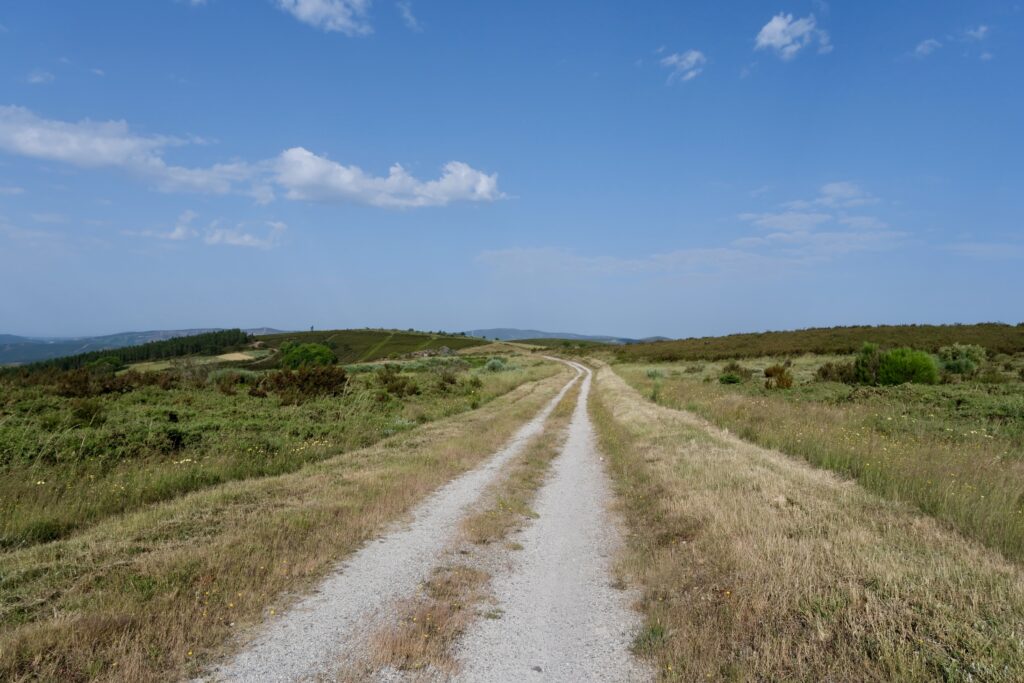
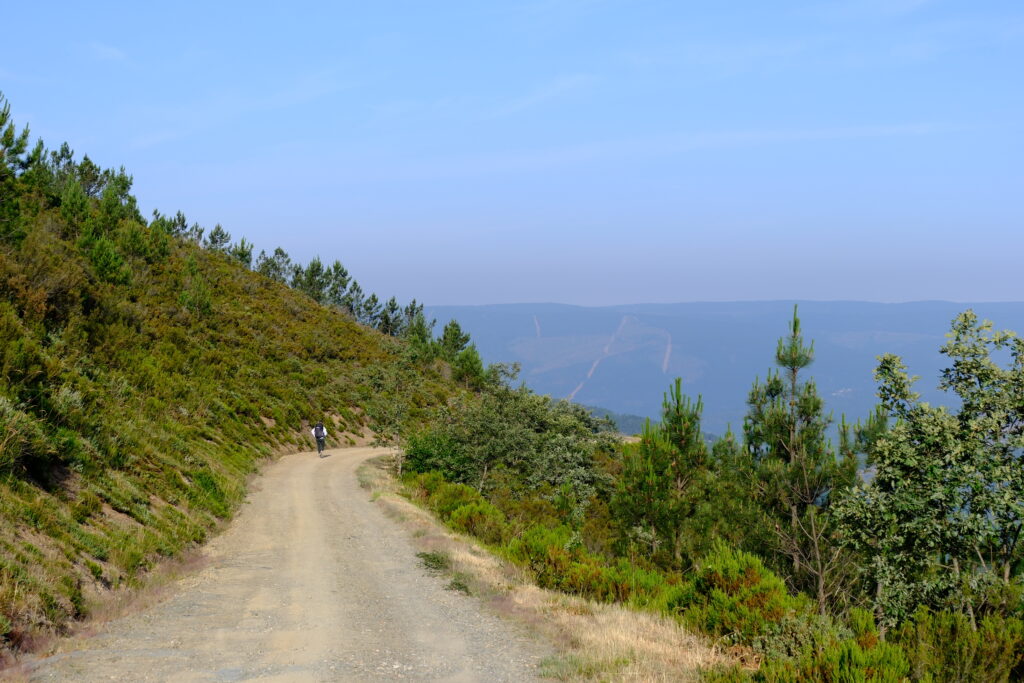
During the course of the trip, we got through a few smaller villages without any facilities for pilgrims. We only came across one drinking water station on the entire route which was just after A Venda da Capela about half way through the route.
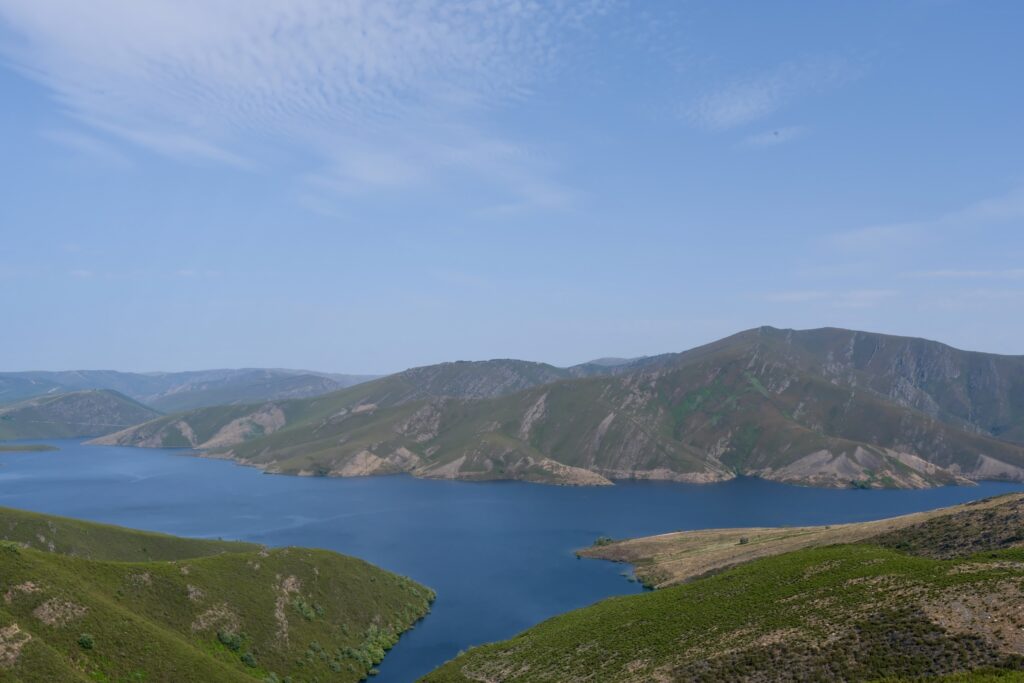
The trip was extremely beautiful though, with a great view of the Ourense Central Massif and the Camba river
The stay in Campobecerros was great. As the Albergue was temporarily closed, we stayed in the hostel Casa Nuñez where we had a good menu del dia which was extremely generous. The experienced camino walker will know that it is quite common for local restaurants to offer a three course meal including wine for 15-18 EUR – in some cases dedicated to pilgrims (Menu de Peregrinos) or more broadly as a daily special (Menu del Dia).
Day 2: Campobecerros – Laza
The second day we got out early – around 7 o’clock – and also had a shorter walk to complete, only around 16 kilometers. Like on the previous stage, we walked through wildlife and small villages without any conveniences.
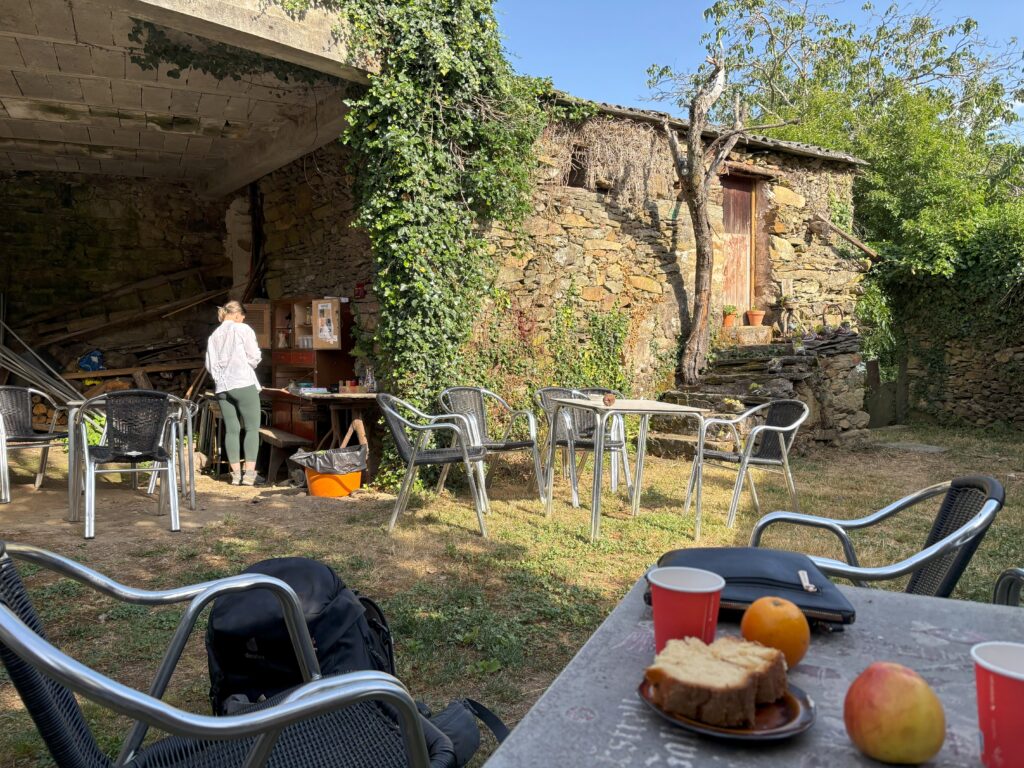
About halfway through the route, there is a place called As Eiras where there is a donation based refreshment station for pilgrims. We really enjoyed that and got a bit of rest before walking on towards Laza.
The stage took us to a lower altitude which meant that we were walking downwards most of the trip. Walking downhill may seem easier but can be hard on the knees and this descent was no exception.
On arrival in Laza, we were met by the chief fireman who administers the Albergue as well as the local fire brigade. He checked us in to the Albergue which is located a bit away from the center of the village.
Laza has several bars but very few of them offered real meals – at least not on this occasion. The one that does have a full menu is Descanso do peregrino where we had lunch upon arrival.
In Laza we encountered a San Joao party honoring Saint John the Baptist, with roots in both pagan midsummer traditions and Christian celebrations, in this case featuring a local band playing celtic music on traditional instruments
Day 3: Laza – Vilar de Barrio
The is yet another stage in beautiful landscapes but with limited facilities along the way is the case for most stages on this route. The first half of the stage we were walking to higher and higher altitudes, reaching the top just after the village Santa María da Alberguería where there is a pilgrims bar with refreshments. Like many of these local bars, they only accepted cash.
After Albergueria, the there is a long descent towards Vilar de Barrio which is located in a big valley between the hills.
Like most Albergues in Galicia, the one in Vilar de Barrio was in great condition with great facilities but without accessories – a kitchen with stove, oven and a fridge but without any pots, pans or cutlery. According to what we understood, the government Galicia ordered all equipment from the Albergues to be removed in an effort incentivise camino walkers to eat out at local restaurants
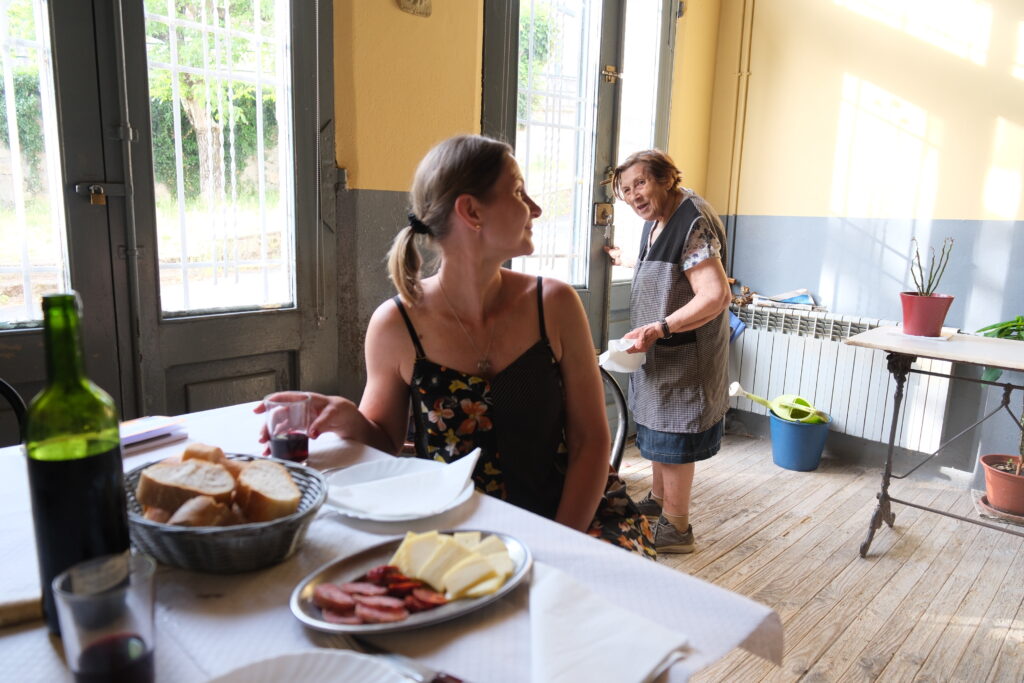
The highlight of Vilar de Barrio was Casa Carmina, a local restaurant run by an old lady in her 80s with homemade rustic food and wine served from unmarked bottles. The restaurant has apparently mostly unchanged for more than 50 years.
Day 4: Vilar de Barrio – A Pousa
After a few days of walking up and down the hills, the flat and long walk out from Vilar de Barrio felt really nice. It is one of the easier stages of the route which took us through miles of farmlands. About halfway through the route we started to walk uphill again followed by a decline down to Xunqueria de Ambia where we stopped for lunch
In the village encountered a friendly dog who apparently knew everybody in the locally. The dog guided us towards A Pousa before disappearing in the horizon. The inclination was quite steep, and gave us a taste of what would be coming in the subsequent stages.
We stayed in Pension A Pousa where we had one of the better meals along the way, including a proper sallad which is hard to find in Galicia
Day 5: A Pousa – Ourense
The walk towards Ourense was mostly downhill following roads and streets. Parts of the route goes through a rather uninspiring industrial area. A highlight is the medieval village Seixalbo with its steep and narrow streets about one hour before Ourense.
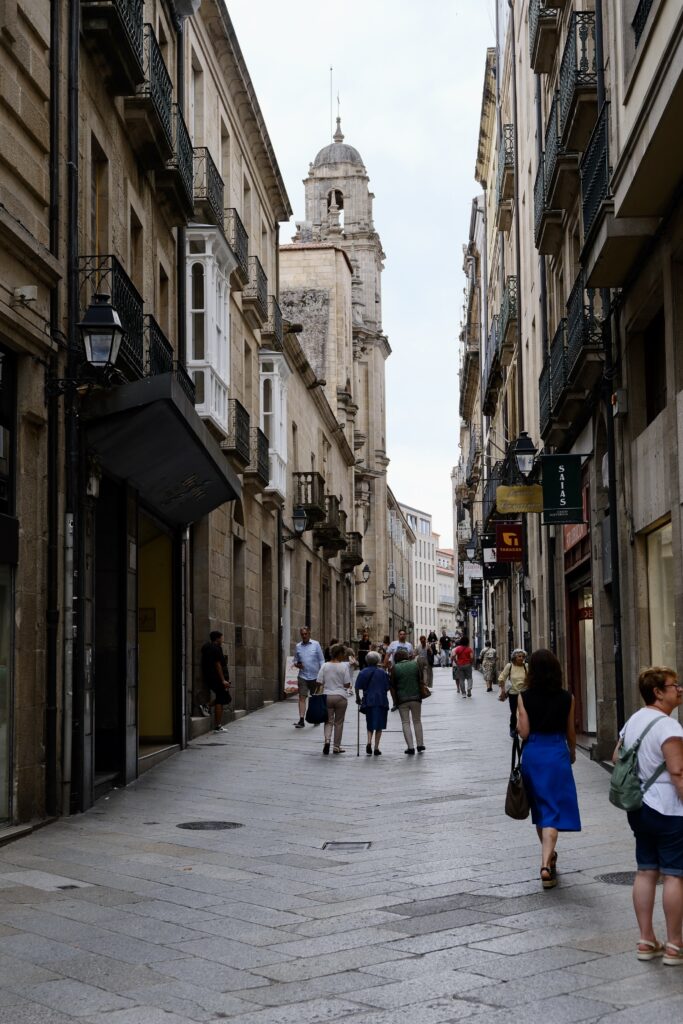
We stayed in the main public albergue of Ourensee in the middle of the city which is third largest city in Galicia featuring many interesting sites such as the medieval cathedral and the geothermal springs which can be experienced in As Burgas very close to the city center.
Day 6: Ourense – Arenteiro
When planning the camino walk, we had foreseen to walk on average 20 km every day. Given the distance of each stage would vary, we knew that some would be closer to 30 km. Originally the plan was to walk from Ourense to Cea (roughly 23 km) and on the next day, from Cea to Estacion de Lalin (roughly 27 km). However, looking at the profile of the route, we realised that were facing significant inclinations on both days, and given that we felt in pretty good shape we decided to prolong day 6 to the village of Arenteiro.
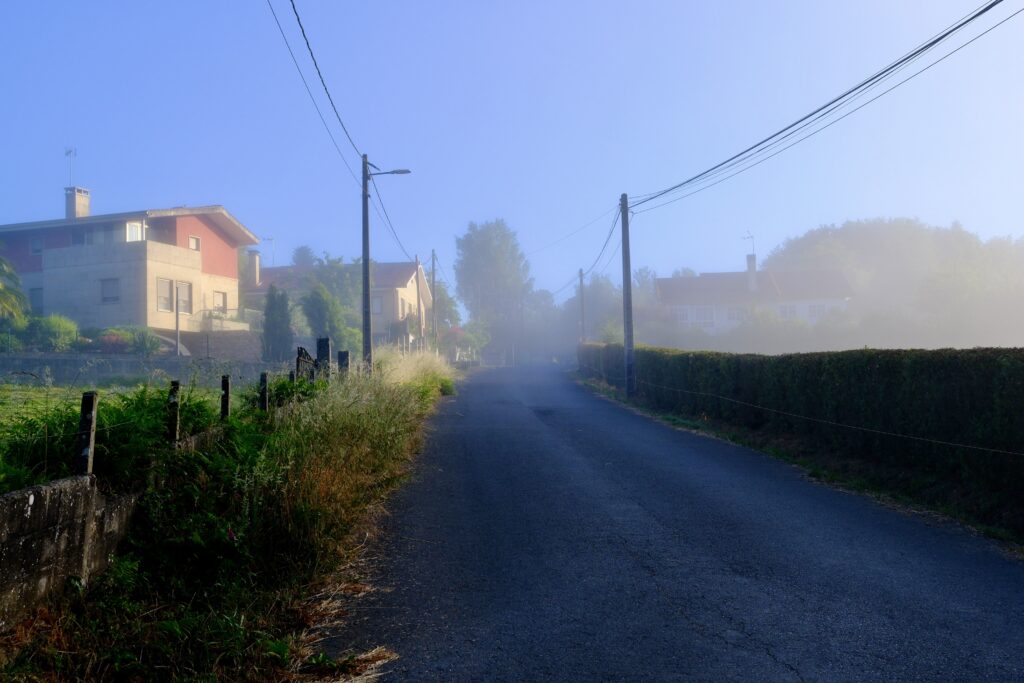
Walking out of Ourense, there are two possible routes towards Cea – the official path via Talamancos – and the alternative route via Canado which follows main roads and is somewhat shorter. We chose the original route through Talamancos as we prefer to walk as little as possible on main roads. The first 10 km of the trip was mostly uphill, and the inclination was one of the steepest of the entire route.
We reached Cea around lunchtime, a sleepy and worn down town with many empty houses and with few facilities. After a lunch stop in a local bar, we went to a local supermarket to procure for the evening as we knew nothing would be available in Arenteiro. The supermarket was small and poorly equipped – and there was no sign of the owner who appeared after more than 10 minutes waiting smelling of sweat and alcohol.
Finally, we started to make our way towards Arenteiro with heavy backpacks, straight uphill on small village roads with the sun baking. We arrived in the mid afternoon completely exhausted.
Day 7: Arenteiro – Estacion de Lalin
The seventh stage continued the inclination until we reached 900 meters around the village of O’Castro about 8 km into the route. From that point on we went mostly downhill with the exception of a smaller inclination just before Estacion de Lalin. We had booked the Hostal A Taberna De Vento which felt like a real luxury after two demanding days.
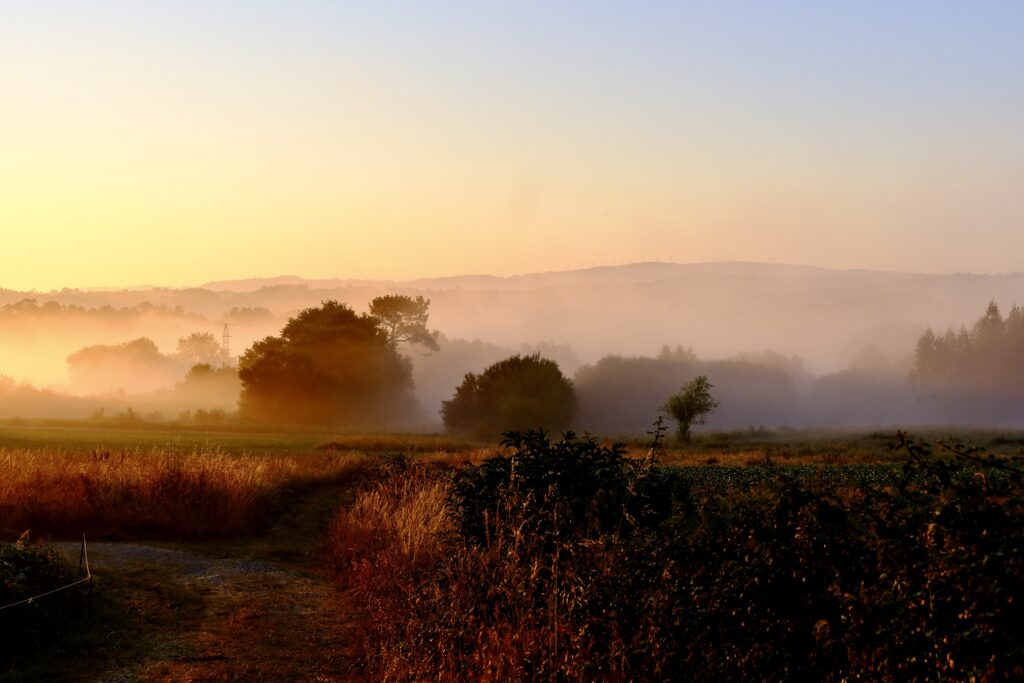
One thing that continues to amaze you when walking the caminos is the diversity of the people walking it. We met several people at 70+ were walking both faster and longer distances than we did.
On the same theme, elderly people seem to be both more physically active and more frequently out socialising in Spain as compared to Scandinavia.
For example, we witnessed an old lady reconstructing the pavement outside her house in Estacion de Lalín.
Day 8: Estacion de Lalin – Dornelas
We decided to extend day 8 to get closer to Santiago and shorten the distance of the last days on the road. This was another long stage walking up and down a lot of hills and as such a moderately challenging walk. We came through Silleda and then Bandeira before walking the final hours to Dornelas walking across kilometers of farmland and small villages with few trees to protect from the burning sun
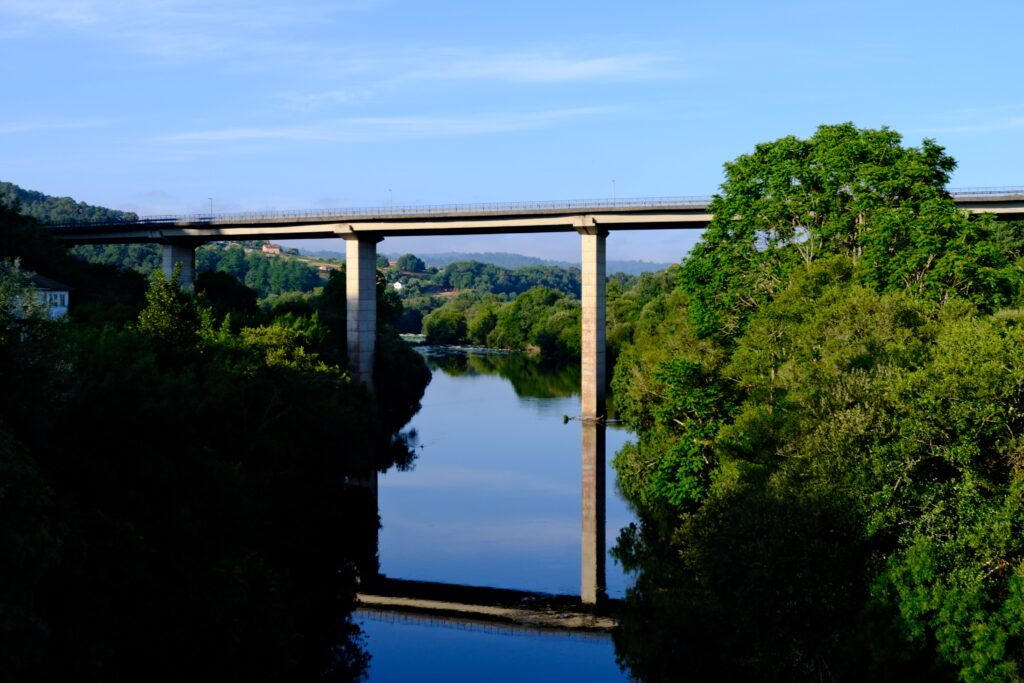
In Dornelas we stayed in Casa Leiras, a nice albergue managed by an Italian family
They told us their story about how they randomly found the house for sale when walking the camino and decided to relocate from Milano to Dornelas and establish and albergue. Fascinating story.
Day 9: Dornelas – Deseiro
On advice from the owner of Casa Leiras, we aimed for the Albergue Reina Lupa in Deseiro as our last stop before Santiago.
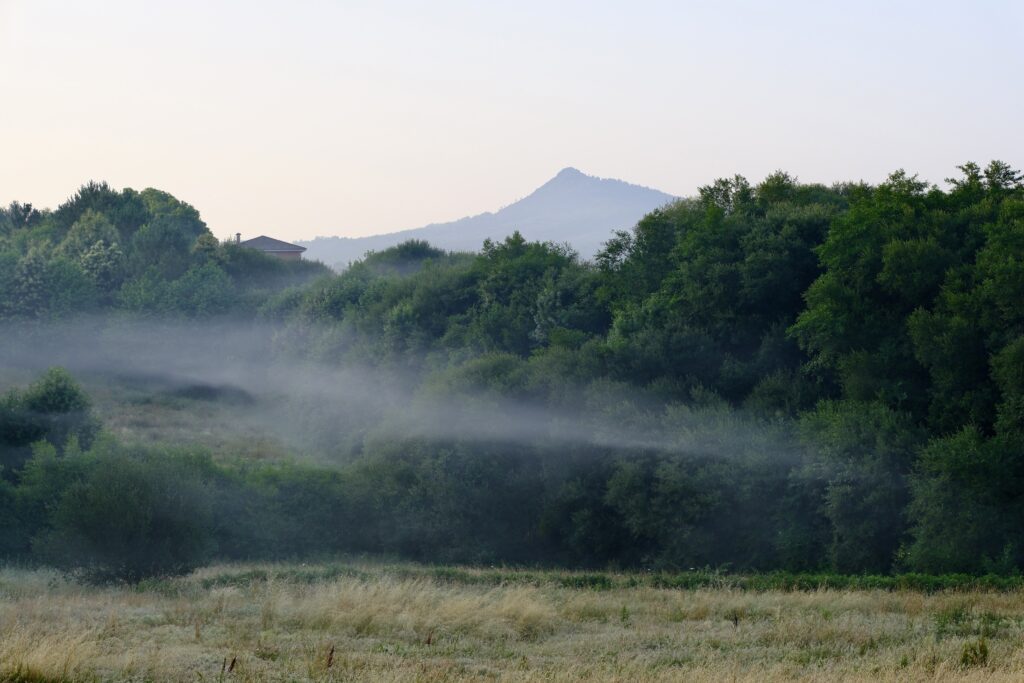
The stage as such was significantly shorter and easier than the previous ones, but we were starting to get a bit worn, so we decided not to extend the route to the top of Pico Sacro although it did look very inviting with its unusual shape. According to the legend, this was a place of dragons and demons before being sprinkled with holy water by the disciples of Saint John
Day 10: Deseiro – Santiago de la Compostella
Walking the last day on the Camino is always a day with mixed emotions. Joy, a sense of accomplishment, sentimental thoughts as well as physical pain.
Depending on the route chosen, you will enter Santiago from different directions. On the French route, you will be walking around the airport, whereas the portuguese route takes you through the south-western suburbs. Sanabres leads you through a much more pleasant path through the eastern parts of Santiago.
Walking this stage on Sunday meant that virtually all bars were closed until we were approach the outskirts of the city center.
We arrived quite and were able to claim our camino certificates without any waiting time, in particular since we had pre-registered with the Oficina del Peregrino